Air Quality in High-Floor Casa Grande Residence Apartments
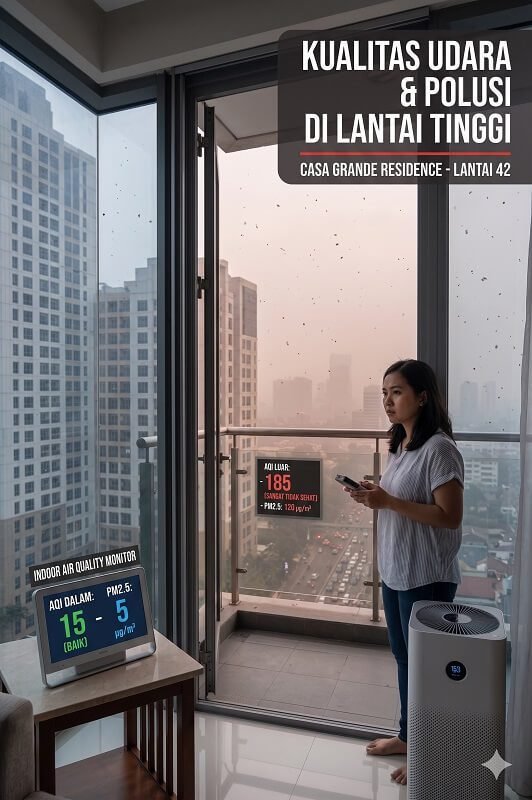
Air quality in a high-floor apartment at Casa Grande Residence
Air quality is one of the most important concerns for people living in a big city like Jakarta. With heavy traffic and a high volume of motor vehicles, finding a home with cleaner air can feel like looking for an oasis in the desert. For executives, expatriates and modern families, healthy breathing is a long-term investment.
Many urban residents therefore look at high-rise apartments. Casa Grande Residence, in the busy Kota Kasablanka superblock in South Jakarta, is a popular premium choice. The key question is whether a high floor there really protects residents from Jakarta's air pollution.
How height affects pollution
Most of Jakarta's pollutants come from vehicle exhaust on the roads and from industrial activity. Heavy particles and exhaust emissions tend to stay trapped near the ground, at street level.
Jalan Raya Casablanca runs right in front of the complex and is known for dense traffic at rush hour. For residents on middle to upper floors, such as the 20th floor and above, direct exposure to exhaust smoke is much lower. In general, concentrations of harmful gases such as carbon monoxide (CO) and nitrogen dioxide (NO2) fall as height increases.
Better natural airflow and cross-ventilation
At ground level, wind is often blocked by buildings, trees and city infrastructure. Dirty air then circulates in the same area and creates pollution hotspots.
Higher up, these obstacles are much fewer, and wind tends to be more consistent and stronger. This helps pollutants dilute naturally. When you open the windows or balcony door of a high-floor unit, cross-ventilation (air moving through the unit from opposite openings) works more effectively to replace stuffy indoor air with fresh air.
Fine particles (PM2.5 and PM10): a realistic view
A high floor gives strong protection against local street pollution and coarse dust (PM10), but it is important to be realistic about fine particles, known as PM2.5. These microscopic particles are so light that they can float in the atmosphere for a long time and spread to heights of hundreds of meters.
On days when Jakarta's air quality index (AQI) worsens because of regional haze or a temperature inversion, PM2.5 can cover the whole city, including high floors. A temperature inversion happens when a layer of warm air presses down on cooler air beneath it, trapping pollutants so they cannot rise and disperse.
Even so, a high floor still gives a better safety margin. Being far from road dust means visible dirt, pollen and heavy dust particles are less likely to settle on your floors or furniture.
Architecture and daily air management
According to the source, the building's facade is designed to make the most of natural sunlight, which helps reduce bacteria and mold indoors. Morning sun through the large glass windows also acts as a natural disinfectant and reduces excess humidity.
How to improve air quality inside your unit
Residents can take a few practical steps to improve indoor air quality.
- Use an air purifier with a True HEPA filter. It filters out any PM2.5 that enters when you open the balcony, so the air you breathe while sleeping is cleaner.
- Ventilate smartly. Open windows and the balcony door in the morning, around 06.00 to 08.00, when traffic pollution on Jalan Raya Casablanca has not yet peaked. Avoid opening windows during the evening rush hour, when exhaust fumes build up.
- Add air-cleaning plants such as Snake Plant, Peace Lily or Spider Plant. They add to the interior and help absorb harmful volatile organic compounds (VOCs).
What to check before you rent or buy
If air quality matters to you, ask to view a unit on a middle or upper floor and visit at different times of day, including the evening rush hour. Check which direction the windows and balcony face, and how well the unit ventilates. Ask the agent to confirm availability and any building rules, since these are not covered here.
Conclusion: a health investment in the city center
A high floor at Casa Grande Residence offers easy access to a modern lifestyle hub and a buffer against heavy street pollution. Protection against large-scale regional pollution needs extra air filtration, but being free of road dust, direct exhaust smell and traffic noise is a real benefit.
If you would like to compare high-floor units, contact our team and we will help you arrange viewings.
Frequently Asked Questions
Does a high floor reduce air pollution in Jakarta?
Yes, for street-level pollution. Concentrations of gases such as CO and NO2 fall as height increases, and direct exhaust exposure is much lower from the 20th floor up.
Are high floors protected from PM2.5?
Not fully. PM2.5 can spread to heights of hundreds of meters and can cover the whole city when haze or a temperature inversion occurs.
When is the best time to open windows?
Around 06.00 to 08.00, before traffic pollution on Jalan Raya Casablanca peaks. Avoid the evening rush hour.
Do I need an air purifier in a high-floor unit?
It is strongly recommended. A True HEPA purifier filters remaining PM2.5 that may enter when you open the balcony.
Which plants help indoor air?
Snake Plant, Peace Lily and Spider Plant help absorb volatile organic compounds (VOCs).