Waste and Recycling at Casa Grande Residence Jakarta
Waste and Recycling at Casa Grande Residence: What Residents Can Expect
Casa Grande Residence is a high-rise residence in South Jakarta, directly integrated with the Kota Kasablanka mall. The building management says it runs a structured, modern and hygienic system for recycling and household waste.
This article explains how that system works day to day, based on what the management describes. For expatriates comparing apartments, waste handling affects daily comfort, hygiene and how the building feels over time.
Why Waste Management Matters in a High-Rise
A superblock (a large mixed-use development) with many residents produces a very large amount of household waste every day. Without a proper system, this can cause bad smells, pests that spread germs, and a drop in the look and value of the building.
The management aims to keep residents comfortable 24 hours a day, with no sanitation problems in the lobby, corridors or shared facilities. It also pays attention to how the waste is processed after it leaves the unit, not only to getting it out of the building.
How Household Waste Disposal Works
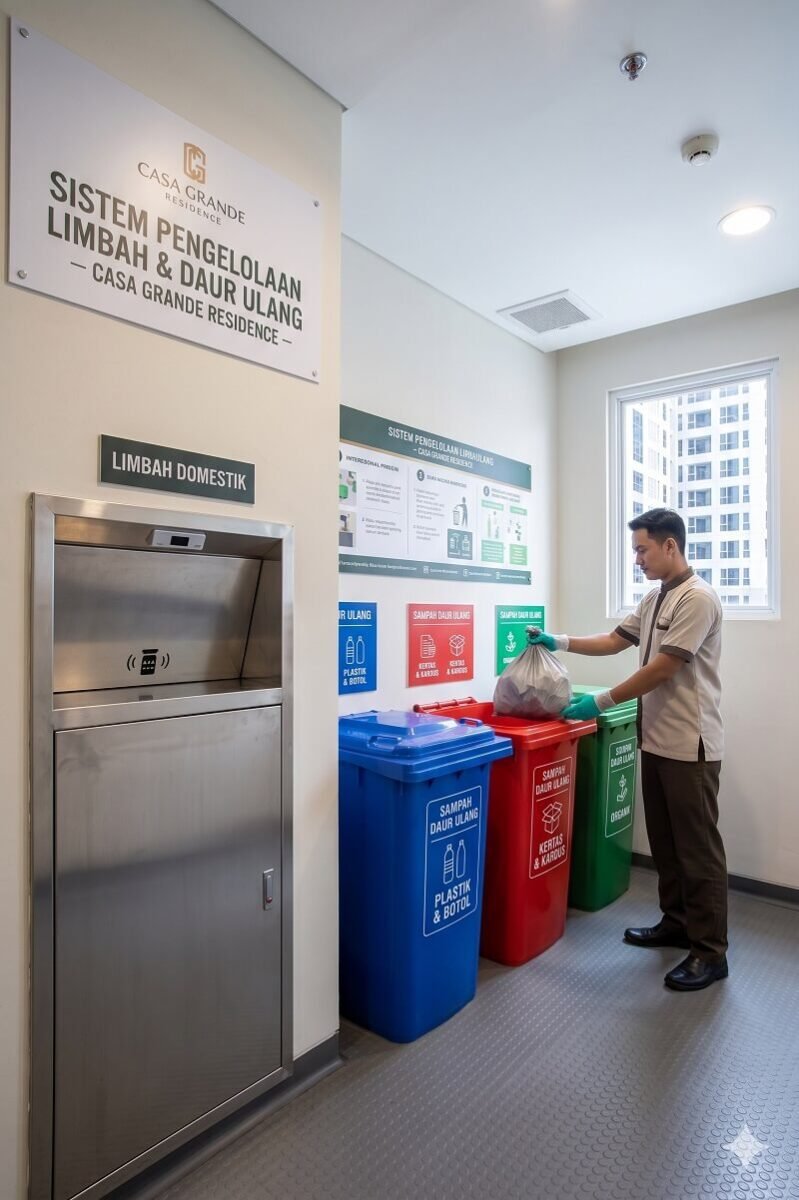
Each floor has a closed rubbish room, also described as a trash chute area. You do not need to carry bags down to the ground floor or basement. You tie your daily household waste tightly and put it into the trash chute in the service area on your floor.
The chute is designed with sound-dampening technology to reduce noise as waste slides down. The area also has an exhaust fan system to keep corridors fresh and free of bad odours.
At the final collection area downstairs, a cleaning service team sorts and tidies the waste. It is then collected by a third party or the relevant government agency. This main area is cleaned and disinfected regularly to prevent bacteria and insect nests.
Recycling and Waste Sorting
The management encourages residents to take part in the recycling program and to separate waste inside their own units. It provides collection points divided by material type. Sorting is generally split into these main categories:
- Organic waste: food scraps, fruit peel and perishable kitchen material. Keeping it separate stops liquids from spoiling recyclable items.
- Plastic and packaging bottles: water bottles, plastic food containers and household product packaging. Residents are often encouraged to rinse and crush bottles to save space.
- Paper and cardboard: newspapers, magazines, documents and boxes from online shopping.
- Glass and metal: soda cans and glass bottles, which need extra care so they do not break and hurt cleaning staff.
What Happens After Sorting
The building works with a professional waste management partner. This vendor collects the sorted waste and takes it to a recycling facility, so it can be processed again and not simply pile up at the final landfill (TPA).
What This Means for Tenants and Buyers
A clean, odour-free building that follows sustainable principles is said to be easier to sell and to rent out. The source notes that buyers and tenants, especially expatriates, tend to hold high standards on environmental care when choosing a home.
Cleanliness also matters for health, particularly for toddlers and children who play in the facility areas. Before signing, ask the agent to confirm how sorting works in practice and what is included in your monthly service charge.
Considering Casa Grande Residence?
If waste handling and hygiene are on your checklist, ask our team to confirm the current sorting rules and to arrange a viewing so you can see the rubbish room and corridors yourself.
Frequently Asked Questions
Do I have to carry my rubbish to the basement at Casa Grande Residence?
No. Each floor has a closed rubbish room with a trash chute in the service area. You put tied bags of daily household waste into the chute.
Are trash chutes noisy or smelly?
The chute uses sound-dampening technology, and the area has an exhaust fan system to keep corridors fresh and free of bad odours.
Does the building recycle?
Yes. The management runs a recycling program with collection points by material, and a waste management partner takes sorted waste to a recycling facility.
How should I sort my waste?
The main categories are organic waste, plastic and bottles, paper and cardboard, and glass and metal. Rinsing and crushing bottles is often encouraged.
Who collects the waste from the building?
The cleaning service team handles waste at the final collection area, and it is then collected by a third party or the relevant government agency.